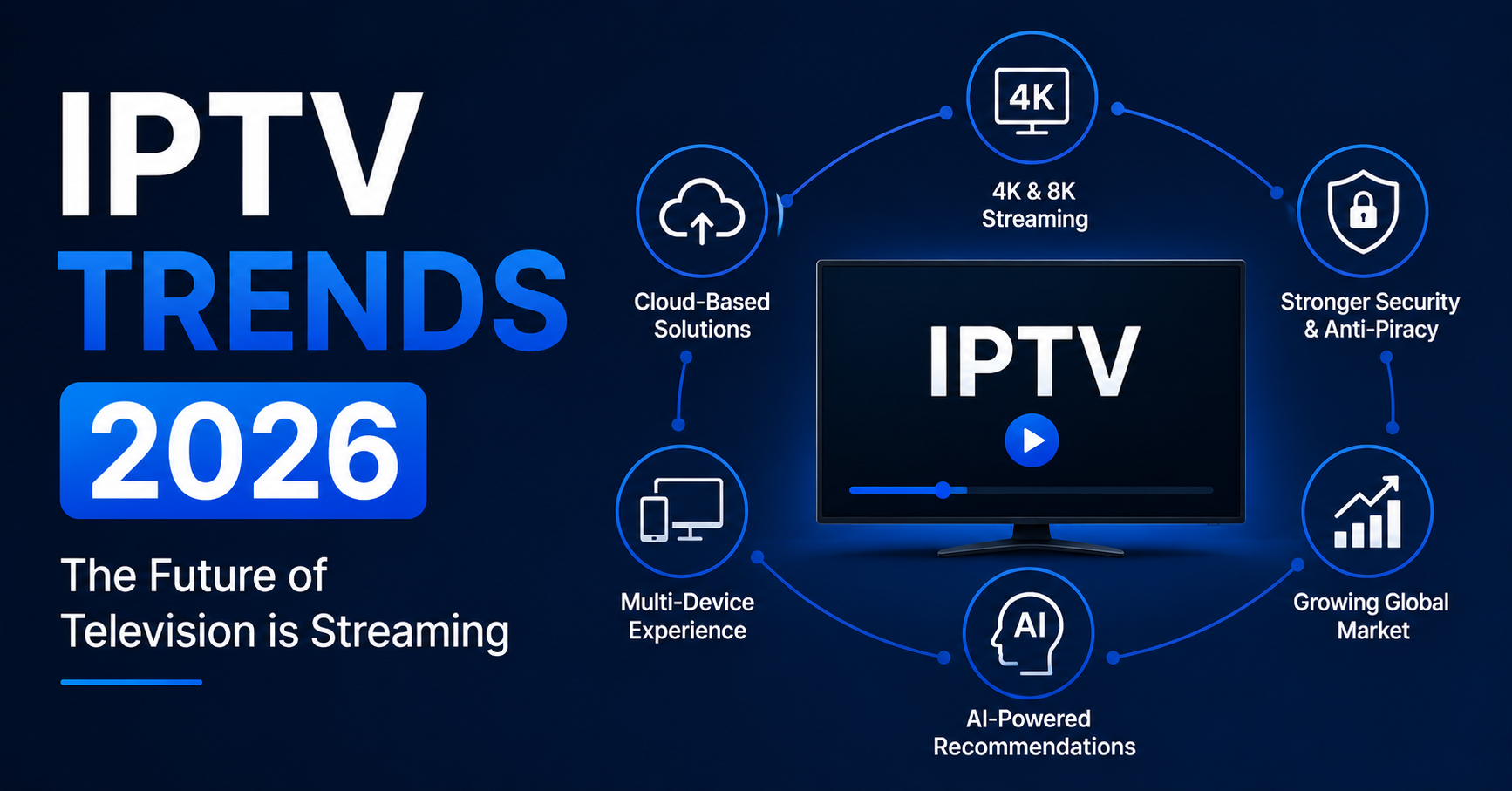
The rise of internet-based entertainment has transformed how audiences consume media, and iptv trends are at the center of this evolution. As traditional cable subscriptions decline, iptv trends reveal a clear shift toward flexible, on-demand, and personalized streaming experiences. From AI-powered recommendations to 4K and cloud-based delivery systems, IPTV continues to reshape the global television industry.This comprehensive guide explores the latest developments driving IPTV growth and what viewers and businesses can expect in the coming years.What Is IPTV?IPTV (Internet Protocol Television) delivers television content through internet networks instead of traditional satellite or cable formats. Unlike conventional broadcasting, IPTV allows:On-demand streamingLive TV over internet connectionsInteractive featuresMulti-device compatibilityIPTV services typically operate via apps on smart TVs, smartphones, tablets, and streaming devices.Major IPTV Trends in 2026Several technological and consumer-driven trends are shaping the IPTV industry.1. Growth of On-Demand ContentModern viewers prefer flexibility. IPTV platforms now prioritize:Video-on-demand (VOD) librariesCatch-up TVTime-shifted viewingPersonalized watchlistsThis shift reflects changing consumer habits, where audiences want control over when and how they watch content.2. AI-Powered PersonalizationArtificial intelligence is playing a growing role in IPTV services.AI-driven features include:Content recommendations based on viewing behaviorAutomated subtitle generationSmart search functionsPredictive content suggestionsPersonalization increases viewer engagement and reduces content discovery time.3. 4K and 8K Streaming ExpansionHigh-resolution streaming is becoming a standard expectation.With improved internet infrastructure and fiber connectivity, IPTV providers are increasingly offering:4K Ultra HD channelsHDR (High Dynamic Range) supportEnhanced audio formatsAs 8K technology develops, IPTV platforms may lead its mainstream adoption.4. Integration with Smart Home EcosystemsSmart homes are influencing IPTV trends. Many IPTV services now integrate with:Voice assistantsSmart speakersConnected home devicesAI-enabled remotesVoice commands allow users to search content, change channels, and adjust volume seamlessly.5. Cloud-Based IPTV InfrastructureCloud technology has significantly improved IPTV reliability.Benefits of cloud-based systems include:Scalable streaming capacityReduced bufferingFaster updatesLower infrastructure costsCloud delivery ensures better uptime and global content distribution.6. Multi-Device StreamingConsumers expect cross-device accessibility. IPTV platforms now offer:Simultaneous streaming on multiple devicesSeamless device switchingMobile-friendly interfacesTablet and laptop compatibilityThis flexibility supports modern lifestyles where viewers consume content across different screens.7. Subscription Model DiversificationIPTV services are experimenting with various pricing strategies:Monthly subscriptionsTiered content packagesAd-supported streaming optionsPremium add-onsAd-supported tiers allow cost-conscious consumers to access content at lower prices.8. Interactive and Social ViewingIPTV is becoming more interactive. Emerging features include:Live chat during eventsAudience pollsIntegrated social sharingMulti-view sports screensThese features enhance engagement, particularly for live sports and entertainment events.9. Enhanced Security and Anti-Piracy MeasuresAs IPTV grows, providers are investing in:Advanced encryptionDigital rights management (DRM)Secure payment systemsGeo-blocking technologiesProtecting intellectual property remains a top priority for legitimate services.10. Rise of Regional and Niche IPTV ServicesAnother important development among IPTV trends is the expansion of niche platforms catering to:Regional languagesCultural contentSpecific sports leaguesDocumentary-focused audiencesThis segmentation allows providers to target highly specific demographics.IPTV vs Traditional CableIPTV continues gaining popularity due to several advantages over traditional cable:IPTV AdvantagesGreater flexibilityLower equipment requirementsOn-demand featuresGlobal accessibilityPersonalized recommendationsCable TV LimitationsFixed programming schedulesHigher installation costsLimited interactivityAs broadband access improves worldwide, IPTV adoption is expected to accelerate.Challenges Facing IPTVDespite strong growth, IPTV providers face challenges:Bandwidth limitations in rural areasContent licensing costsCompetition from global streaming giantsRegulatory compliance requirementsOvercoming these obstacles will be critical for long-term sustainability.The Future of IPTVLooking ahead, IPTV is expected to incorporate:Virtual reality (VR) streamingAugmented reality (AR) enhancementsAI-generated content summariesAdvanced interactive sports experiencesTechnological innovation will continue shaping how content is delivered and consumed.FAQsWhat are the latest IPTV trends in 2026?Key trends include AI personalization, 4K streaming, cloud infrastructure, multi-device access, and interactive features.Is IPTV replacing cable TV?IPTV is steadily gaining market share as consumers shift toward flexible, internet-based streaming services.Does IPTV require fast internet?Yes. Stable high-speed internet is essential for smooth streaming, especially for HD and 4K content.Are IPTV services legal?Licensed IPTV providers operating with proper broadcasting rights are legal. Users should verify service legitimacy before subscribing.What devices support IPTV?IPTV works on smart TVs, streaming sticks, smartphones, tablets, laptops, and dedicated IPTV boxes.ConclusionThe rapid evolution of iptv trends highlights a broader transformation in global media consumption. With AI-powered personalization, ultra-high-definition streaming, cloud-based infrastructure, and multi-device compatibility, IPTV is redefining how audiences engage with television content. As technology advances and internet connectivity improves, IPTV is poised to become an even more dominant force in the digital entertainment ecosystem.